
Messaging
After an epiphany at the recent Vipassana, I've decided to significantly cut down on my use of WhatsApp. I've permanently turned off notifications etc.

At my last job (before my startup) I developed this reputation of being the guy who hated phone calls. It was a deliberate attempt on my part. I had then come to the conclusion that phone calls are antithetical to “deep work” and whenever someone would call me I’d ask them to send a message instead.
Soon enough, people got the message and they seldom called me unless urgent, and I remember a colleague spending a minute profusely apologising for calling before getting to the matter at hand.
So at Babbage, we went fully remote, and decided to build a “strong Slack writing culture”. We made sure all employees were comfortable with using Slack, and encouraged people to write, and message, and overcommunicate in writing. They mostly did. Things worked fine.
However, following my five days of daydreaming at my recent Vipassana course, I’m not so sure. I’m not sure that when it comes to deep work that instant messaging is any superior to calling. My thought process on my last day there, in my last meditation session there (after I had decided to drop out) went like this:
“I’d henceforth never want to do sales over WhatsApp. It’s exhausting. I’m constantly checking the app to see if someone has replied. I’m constantly anticipating what someone would say. It would be ideal if, if I were to do sales, all communication were over a combination of emails and phone calls”.
“Actually, why does it have to do only with sales? This applies to all instant messaging. That it is ‘instant’ implies the need to be always online / available. And that can be stressful. I’m actually wasting a lot of time on WhatsApp in this kind of conversations.”
“The actual time spent in conversation on IM is fairly high, if you think of all the time you take in typing, wondering if someone has replied, and anticipating what they might say. And you constantly keep getting disturbed. Maybe it’s better if they were to just call you, quickly finish the matter and hang up. You are disturbed from your deep work, but just once”
And so on. By the time that meditation session was done, I had been convinced that a “barbell of calls and emails” is far superior to instant messaging (emails are necessary for long-form text-based writing, especially for people like me who communicate far better in writing than in speech. And the beauty of emails is that you don’t expect a quick reply, so you don’t need to always be online).
When I got home later that night, I started implementing a new system. It goes like this:
WhatsApp notifications on my phone are turned off
I’ve removed WhatsApp from my home screen. So I don’t keep getting reminded how many unread messages I have there.
A few times a day (ideally 3, today has been a bit more since I’m using WhatsApp for the first time in 10 days today), I’ll check WhatsApp and “treat it like email” (look at all the unread messages and reply to each in long form / multiple messages to give enough context). And then not bother. If it bothers someone so much that I haven’t replied in an hour, they’ll call me
Of course if someone has just said “hi” they don’t deserve a reply. They are just wasting my time trying to be polite.
Early days yet, but I find myself being far calmer having embraced this policy. I still normally keep WhatsApp open on my computer - since my job hunt will use WhatsApp extensively. However, once I find a job, I plan to not use WhatsApp on my computer any more.
I remember my wife telling me a few years ago about how she missed Google Talk’s interface - where your “online connections” would be listed on top, followed by “busy connections” and then offline. This UX meant that you were strongly discouraged from pinging anyone who was not online and “available”. That led to far superior conversations.
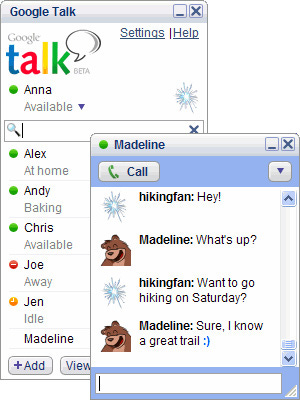
Three days ago, when I came home and told her about my new WhatsApp policy, she said “yeah, this is like the Google Chat available thing. That going away has killed instant messaging”. And I completely agree with her.
WhatsApp’s current UX might optimise their strategy of maximising number of hours spent on the app and number of messages sent daily. But that doesn’t account for the quality of the UX and what people feel about the app.
Anyways, if you are someone who normally communicates with me on WhatsApp, I may not be as available there as I used to be. Here is a hint for you - if you really want to get my attention, maybe you should try good old SMS / iMessage. I will never turn off notifications for that!
Instant messaging also gives a false sense of urgency. For example, a direct message on Slack request, requesting a response, or a heads up on a bug in a group channel, often generates an immediate response from people. It takes a lot of discipline, to be process oriented and categorize severity and priority based on the actual urgency.
A Face-to-face discussion, allows for nuance to trickle in, and helps us make more rational determinations.